
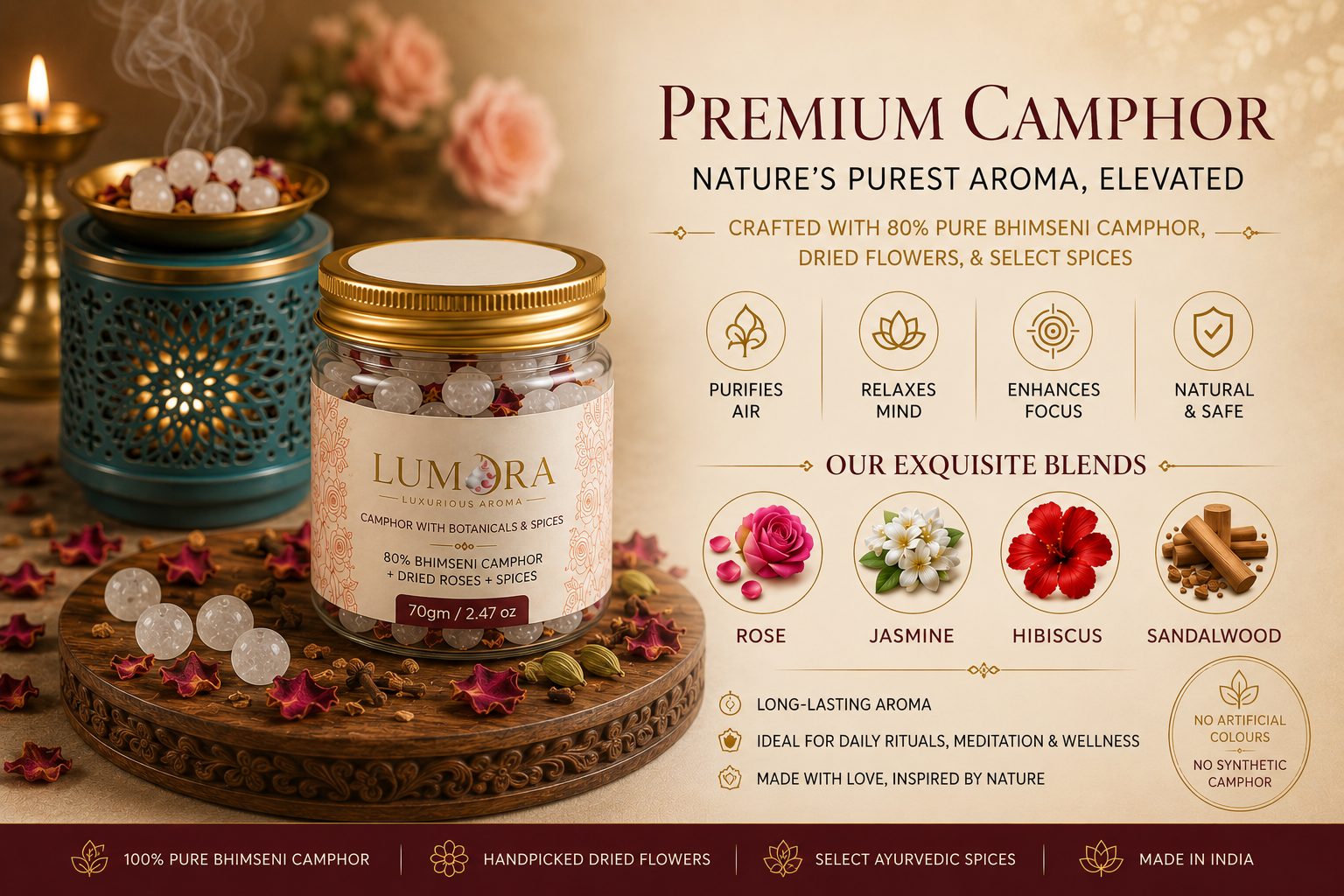
The Difference Starts With Source
Natural camphor is historically obtained by distilling camphor-bearing plant material and purifying the resulting aromatic fraction. Synthetic camphor is produced industrially, commonly using alpha-pinene from turpentine as the starting material. Both routes can produce camphor, so the word synthetic should not be used as a synonym for fake, and natural should not be used as a synonym for risk-free.
A Chemistry Difference
Camphor has the molecular formula C10H16O and exists in mirror-image forms called enantiomers. Natural camphor is commonly associated with one predominant optical form, whereas conventional synthetic camphor is usually racemic, meaning it contains both mirror-image forms. This difference is not something a customer can reliably see with the naked eye.
Appearance And Format
Bhimseni camphor is often sold in translucent, irregular slabs or pieces. Synthetic camphor is frequently encountered in uniform tablets or blocks, especially in mass-market pooja products. However, either material can be processed into different shapes. Shape is a useful description of format, not a conclusive origin test.
Aroma, Flame And Residue
A sharp aroma, quick evaporation, bright flame or low visible residue may be consistent with camphor, but none of these observations certifies natural origin. Burner temperature, additives, dust, wick material and ventilation can all change what a person sees or smells. Laboratory methods and supplier documentation are more dependable.
Choosing For Pooja Or Home Aroma
If you prefer Bhimseni camphor for a traditional ritual, look for clear labelling, traceable packing information and an honest ingredient declaration. If botanicals are added, they should be named. Lumora botanical camphor intentionally contains visible dried flowers, crushed spices and aromatic materials, so some botanical residue after warming is expected.
The Safety Rule Is The Same
Natural and synthetic camphor are both volatile and flammable. Neither should be ingested. Use small quantities with ventilation, keep away from children and pets and never leave a lit burner unattended. Source preference does not change the need for fire safety.
Choose a Lumora Botanical Camphor Ritual
Begin with the 75g Bhimseni Botanical Gift Pack, including a jar and ceramic burner, or replenish your ritual with the 150g botanical camphor refill pouch or 300g botanical camphor refill pouch. You can also follow how a Lumora jar is made, from the soft camphor pieces and botanicals to the finished blend.